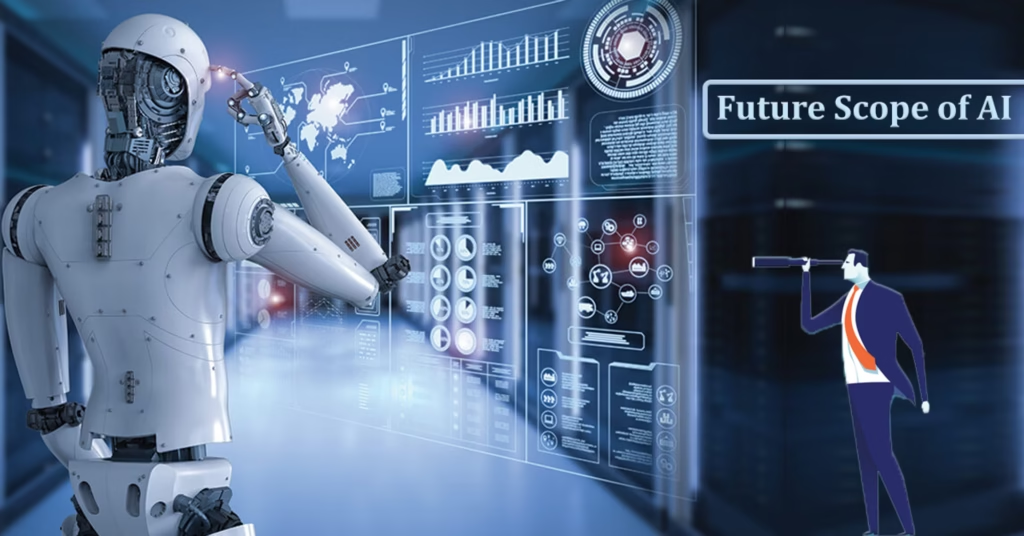

Artificial Intelligence Explained: What It Is, How It Works, and Why It Matters in 2026
Artificial Intelligence is a computing concept that enables a system assume and solve complex problems as we humans do with our intelligence. For instance, we carry out a venture, make mistakes and learn from our mistakes (Atleast the sensible ones of us do!). Likewise, an AI or Artificial Intelligence is meant to paintings on a hassle, make some mistakes in solving the trouble and analyze from the troubles in a self-correcting way as a part of its self-improvement. Or in other phrases, consider this like gambling a recreation of chess. Every awful circulate you make reduces your probabilities of prevailing the sport. So, on every occasion you lose in opposition to your pal, you try remembering the movements you made that you shouldn’t have and follow that information for your next sport and so forth. Eventually, you get better and your precision, or in this situation chance of triumphing or solving a hassle improves by a noteworthy quantity. AI is programmed to do some thing just like that.
Artificial Intelligence (AI) is a “a huge set of tools for making computer systems behave intelligently” and in an automatic style. This consists of voice assistants, recommendation systems, and self-using automobiles.
Machine Learning (ML) is the “field of look at that offers computer systems the capacity to examine without being explicitly programmed.” The lion’s proportion of ML includes computer systems mastering styles from current information and making use of it to new statistics in the form of creating predictions, such as predicting whether or not an electronic mail is unsolicited mail or now not, whether or not a customer will churn or not, and diagnosing a particular piece of clinical imaging.
Automation : Automation is using computerized equipment in a production device or different manufacturing system.In Wikipedia, automation is defined as “the era by means of which a method or manner is completed without human assistance.” Basically, automation is a gadget or generation that automates a few work that changed into previously completed with the aid of people.

A Simple Guide to Understanding Different Types of Artificial Intelligence Tools and How They Work for Beginners
Artificial Intelligence (AI) gear are anywhere nowadays, however for novices, the variety can feel overwhelming. From writing assistants to photo turbines and coding helpers, each kind of AI device is designed for a particular motive. The exact news is that you don’t want to understand complex technology to apply them—you simply need to know what every type does and when to apply it. This guide breaks down the principle categories of AI equipment in a easy, newbie-pleasant manner so you can quickly understand how they paintings and wherein they fit into your every day life.
Text Generation AI Tools (ChatGPT):
ChatGPT is the most superior to this point AI-powered conversational model that excels in natural language knowledge and generation. It comprehends text enter, maintains context in the course of conversations, and gives contextually relevant responses. Its capabilities embody content material advent, customer support chatbots, language translation, code writing, instructional aid, idea brainstorming, statistics analysis, language gaining knowledge of, writing assistance, photo analysis, facts evaluation, and answering widespread knowledge questions.
Image Generation AI Tools (Midjourney):
Midjourney stands as a high-quality generative artificial intelligence (AI) application that boasts the potential to craft shiny pics from simple text inputs. This is one of the quality image era systems available. Among the outstanding AI art creators together with Dall-E and Stable Diffusion, Midjourney holds its location as a main contender. Leveraging the power of language and diffusion models, this AI marvel is capable of producing both sensible and summary snap shots, showcasing its versatility
Video and Audio AI Tools (Synthesia):
Synthesia is a browser-based AI video era platform that turns text into movies with realistic virtual avatars and synthetic voices. It is extensively utilized by organizations to produce training, onboarding, and communique content with out cameras, studios, or human presenters.
Productivity AI Tools (Notion AI):
Notion AI is an synthetic intelligence–powered productiveness and writing assistant incorporated into the Notion platform. It enables customers generate, summarize, and refine text directly inside notes, documents, and databases. Built to enhance information work, it extends Notion’s collaborative workspace with generative AI competencies for individuals and groups.
Coding and Development AI Tools (GitHub Copilot):
GitHub Copilot is an synthetic-intelligence-powered code of completion device advanced via GitHub in collaboration with OpenAI. It integrates directly into code editors to suggest whole strains or blocks of code as developers type. Released in 2021, it represents one of the first big-scale programs of generative AI to software development.
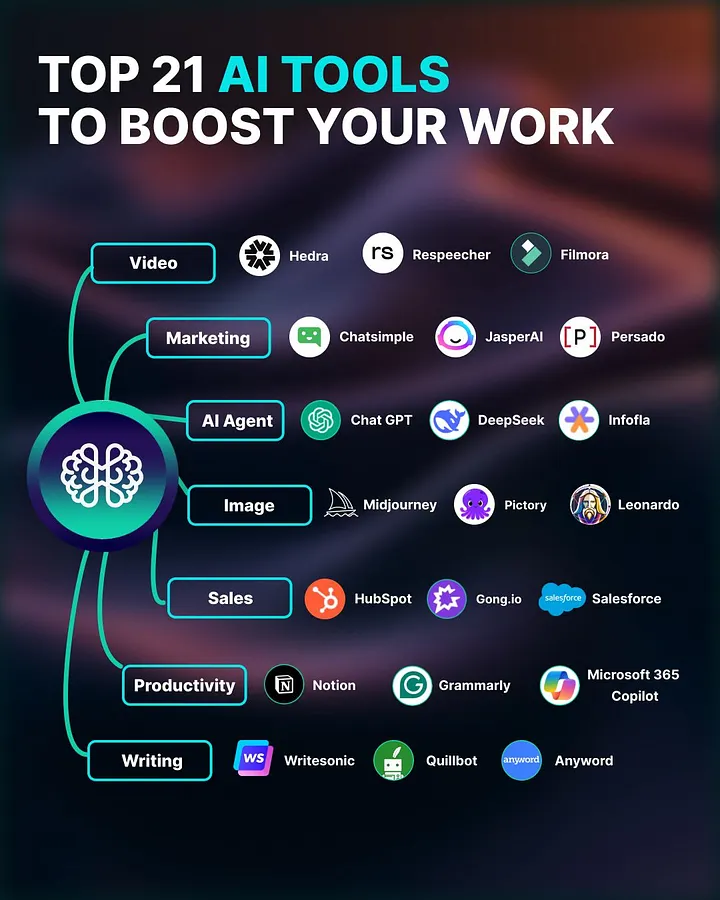
Choosing the Right Artificial Intelligence Tool Made Easy: A Step-by-Step Guide for Beginners
With loads of Artificial Intelligence tools available nowadays, choosing the proper you can experience perplexing—mainly for novices. You may stumble upon dozens of structures that seem to do comparable matters, yet deliver very special effects. The key isn’t always to try the whole lot right away, but to choose gear based on your specific desires, consolation degree, and desires.
This guide will assist you make clever choices whilst selecting an AI device so you can keep time, avoid frustration, and get the first-class outcomes.
Start with Your Goal:
Before selecting any AI device, ask your self a easy question: What do I want to achieve?
Different AI tools are constructed for special purposes.
For instance: If you want assist with writing, a device like ChatGPT is a robust desire.
If your attention is enhancing grammar and clarity, Grammarly might be more appropriate.
If you need visuals or paintings, gear like DALL·E can help.
Understand Ease of Use Artificial Intelligence:
Not all Artificial Intelligence gear are amateur-friendly. Some are designed for specialists and can require technical expertise.
Look for gear that:
Have a easy interface
Offer tutorials or publications
Allow you to begin with minimum setup
Compare Free vs Paid Version
Many AI equipment provide both unfastened and premium plans. While loose variations are amazing for buying commenced, they may include obstacles such as:
Restricted functions
Usage limits
Lower output satisfactory
Paid variations generally provide:
More superior features
Faster performance
Better customizatioon
Check Features and Capabilities of Artificial Intelligence:
Each AI device has its personal strengths. Some are preferred-cause, at the same time as others focus on particular obligations.
For example:
Notion AI is high-quality for organizing notes and workflows
Midjourney specializes in superb inventive picture generation
Understanding Accuracy and Reliability in Artificial Intelligence
AI gear are effective, but they’re no longer ideal. Some can also produce wrong or previous records.
To pick a reliable device:
Test it with simple obligations first
Cross-test important facts
Read consumer evaluations or feedback
Artificial Intelligence in Privacy and Data Security:
When the use of AI gear, you can percentage non-public, expert, or sensitive records. That’s why privacy matters.
Before choosing a tool:
Review its privacy coverage
Understand how your records is stored and used
Avoid sharing confidential records unnecessarily

Getting Started with Artificial Intelligence Tools: A Complete Beginner’s Guide to Using Artificial Intelligence Step by Step
Step 1: Choosing the Right Artificail Intelligence Tool to Start With As a amateur, it’s first-class initially simple and broadly used tools. You don’t need to discover the whole lot at once.
Good beginner-pleasant options include: ChatGPT for writing, getting to know, and brainstorming Notion Artificial Intelligence for notes, summaries, and productiveness DALL·E for growing photographs from textual content Start with simply one tool so that you can attention on getting to know how it works in preference to feeling beaten.
Step 2: Creating an Account and Exploring the Interface Most AI gear require you to create an account the use of an e-mail or social login. Once you register, take a couple of minutes to explore the interface.
Look for: Input container (where you kind your request) Menu or settings Examples or recommendations furnished via the device Help or tutorial sections Tools like ChatGPT are specially amateur-friendly because they resemble a simple chat communication.
Step 3: Learning Your First Prompt A “prompt” is clearly what you ask the AI. It may be a query, guidance, or request.
For instance: “Write a brief blog on healthy meals”
“Explain synthetic intelligence in easy words”
“Give me thoughts for Instagram posts” The better your set off, the better your result.
You don’t want ideal wording—simply be clear and specific.
Step 4: Experimenting Without Fear One of the maximum important elements of studying AI equipment is experimentation.
There are no strict rules, and also you can not “spoil” some thing through trying extraordinary inputs. Try: Changing your prompts barely Asking comply with-up questions Requesting specific formats (lists, summaries, explanations)
Tools like ChatGPT reply dynamically, so each input can provide you with a new angle or end result.
Step 5: Understanding That AI Is Not Perfect AI equipment are effective, however they’re no longer constantly accurate.
They can: Provide previous or incorrect data Misunderstand complicated instructions Generate general responses if activates are uncertain That’s why it’s important to continually evaluation and affirm vital outputs, specially for educational, business, or professional use.
Step 6: Using AI for Real-Life Tasks Once you’re comfortable, begin making use of AI equipment to normal tasks: Writing emails and documents Summarizing lengthy articles or notes Generating ideas for content or projects.
Creating study notes or reasons For example, Notion AI can assist prepare your work while Grammarly improves your writing quality right away.
Step 7: Building Confidence Over Time The more you operate AI equipment, the extra herbal they come to be. At first, you can rely closely on examples or tips, but regularly you’ll discover ways to: Write higher activates Combine equipment for one-of-a-kind obligations Use AI to store time and enhance efficiency Think of AI as a skill—you improve it via practice.
Precision Prompting in Artificial Intelligence: From First Words to Final Results
Start Simple:
As you get began with designing prompts, you ought to keep in mind that it’s far clearly an iterative procedure that requires a number of experimentation to get choicest results. Using a simple playground from OpenAI or Cohere is a good place to begin.
You can start with easy activates and hold including more elements and context as you aim for better effects. Iterating your prompt along the manner is essential because of this. As you examine the guide, you will see many examples in which specificity, simplicity, and conciseness will often come up with better effects.
When you have got a massive venture that includes many extraordinary subtasks, you could strive to break down the task into less difficult subtasks and keep building up as you get higher effects. This avoids adding an excessive amount of complexity to the set off design process at the start.
Artificial Intelligence The Instruction:
You can layout effective activates for diverse easy responsibilities via the use of commands to train the version what you want to obtain, including “Write”, “Classify”, “Summarize”, “Translate”, “Order”, and many others.
Keep in thoughts which you also need to test lots to look what works first-class. Try distinct commands with distinct keywords, contexts, and statistics and notice what works first-class on your precise use case and task. Usually, the more unique and applicable the context is to the undertaking you are attempting to carry out, the higher. We will touch on the significance of sampling and including extra context in the upcoming publications.
Others advocate which you place instructions at the start of the spark off. Another recommendation is to use some clean separator like “###” to split the training and context.
Specificity:
Be very precise approximately the instruction and mission you want the model to perform. The greater descriptive and distinctive the spark off is, the higher the results. This is in particular crucial if you have a desired final results or fashion of era you are looking for. There aren’t precise tokens or key phrases that cause higher consequences. It’s extra critical to have a good format and descriptive spark off. In truth, imparting examples within the set off could be very effective to get preferred output in particular formats.
When designing activates, you have to also hold in thoughts the duration of the spark off as there are boundaries concerning how lengthy the prompt can be. Thinking approximately how precise and specific you have to be. Including too many unnecessary details isn’t always necessarily a terrific technique. The information must be applicable and make a contribution to the challenge handy. This is something you may want to experiment with loads. We inspire quite a few experimentation and iteration to optimize prompts on your packages.
Avoid Impreciseness:
Given the hints above about being specified and enhancing format, it is smooth to fall into the trap of looking to be too smart approximately prompts and doubtlessly developing obscure descriptions. It’s frequently higher to be precise and direct. The analogy right here may be very much like effective communication — the more direct, the more effective the message gets throughout.
Maximizing Personal Productivity: A Comprehensive Guide to Using Artificial Intelligence for Daily Tasks
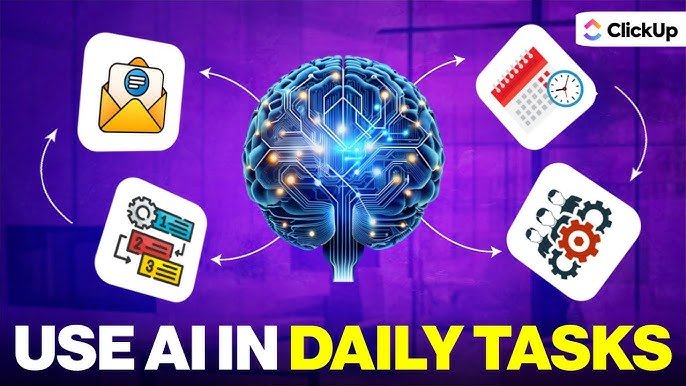
🕒 The Frictionless Life: Mastering AI for Every DayStop dealing with your tools and begin leading your marketers.In 2026, the average person is bombarded by means of one hundred fifty+ notifications and dozens of micro-selections before midday. Traditional productivity strategies—guide calendars, static to-do lists, and endless electronic mail triaging—are not sufficient to maintain up with the pace of current life. Using AI for Daily Tasks is your definitive roadmap to transitioning from a reactive state of “virtual survival” to a proactive nation of “AI-enabled drift.”This guide actions beyond the floor-degree novelty of AI. It explores the integration of Agentic AI—independent tools that don’t just propose textual content, however surely navigate your browser, time table your appointments, and synchronize your expert and personal lives.
🏛️ The Four Pillars of Daily Artificial Intelligence Integration
- The Intelligent Inbox & CommunicationCommunication is the primary “time-thief” of the cutting-edge generation. We dive deep into using equipment like Wisprflow for context-aware voice-to-textual content and Rahi for proactive inbox triage. Learn a way to:Create “Persona Filters” that draft replies in your precise voice.Automate the extraction of dates, tasks, and commitments from messy threads.Use AI to “summarize the silence”—catching you up on missed Slack or WhatsApp context in seconds.
- Dynamic Time-Blocking & SchedulingGone are the days of manually dragging calendar blocks. We discover Motion and Reclaim.Ai, tools that deal with your calendar as a residing organism. Discover how to:Set “Flexible Priorities” that allow AI to reshuffle your day while a meeting runs long.Protect your “Deep Work” hours by using delegating low-stakes scheduling to AI sellers.Sync your grocery lists, health dreams, and paintings time limits into a unmarried, AI-managed timeline.
- Cognitive Offloading & ResearchYour mind is for having thoughts, now not for storing them. Using NotebookLM and Gemini’s Deep Research, you’ll learn how to build a “Second Brain” that actually talks lower back.The five-Minute Brief: How to show a 50-web page PDF or a 2-hour podcast into a 3-minute audio summary on your morning go back and forth.Decision Matrixes: Using AI to examine complex merchandise, journey itineraries, or financial options with real-time records.
- The “Do It For Me” Layer (Agentic Automation)This is the 2026 frontier. We train you a way to accurately installation Zapier Agents and Claude’s laptop-use functions to:Fill out tedious web forms and manipulate repetitive admin tasks.Cross-reference your finances in opposition to your financial institution statements automatically.Trigger “Life Sequences”—e.G., whilst a “Low Battery” alert hits your clever home, AI routinely orders a alternative or schedules a technician.
🎯 The Transformation: Reclaiming 10 Hours a WeekBy the quit of this guide, you will have moved from “knowing about AI” to having a Custom AI Stack. You will understand a way to:Reduce Decision Fatigue: Let AI manage the “what is for dinner?” and “whilst ought to I e book this?” questions.Enhance Creative Output: Use AI as a “Co-Founder” to brainstorm, outline, and refine your satisfactory ideas.Maintain Privacy: Navigate the arena of neighborhood LLMs and “Privacy Wrappers” to make certain your day by day records remains your very own.
Beyond the Hype: A Comprehensive Audit of Technical Limitations and Security Risks in Modern Artificial Intelligence Systems
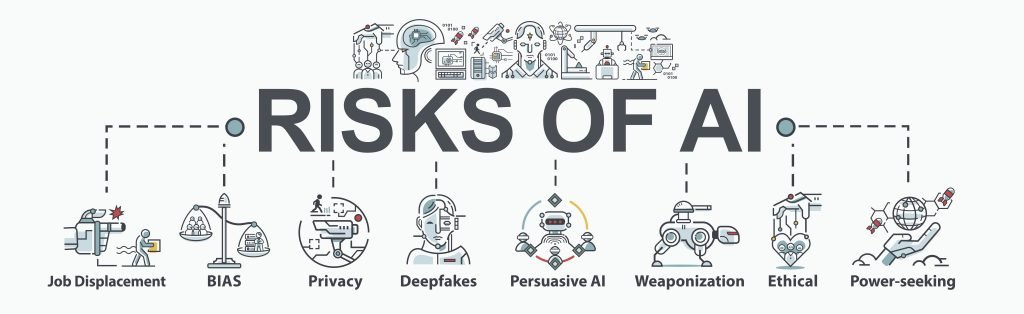
Bias:
Humans are innately biased and the Artificail Intelligence that we increase can mirror our biases. These systems inadvertently analyze biases that is probably gift within the training records and exhibited within the device gaining knowledge of (ML) algorithms and deep studying models that underpin AI improvement. Those learned biases is probably perpetuated all through the deployment of AI, ensuing in skewed results.
AI bias will have unintended results with doubtlessly harmful effects. Examples consist of applicant monitoring structures discriminating towards gender, healthcare diagnostics systems returning decrease accuracy effects for traditionally underserved populations and predictive policing tools disproportionately concentrated on systemically marginalized groups, amongst others.
Cybersecurity threats:
Bad actors can make the most Artificial Intelligence to release cyberattacks. They manipulate AI equipment to clone voices, generate faux identities and convincing phishing emails—all with the purpose to scam, hack, thieve a person’s identity or compromise their privateness and security.
And while companies are taking gain of technological advancements including generative AI, best 24% of gen AI initiatives are secured. This loss of protection threatens to reveal statistics and AI models to breaches, the worldwide common fee of that’s a whopping USD 4.88 million in 2024.
Data privateness problems:
Large language fashions (LLMs) are the underlying AI models for many generative AI packages, including digital assistants and conversational AI chatbots. As their name implies, those language fashions require a huge volume of schooling information.
By scraping and amassing information from websites, web crawlers can source the facts that enables train LLMs. This facts is regularly acquired without customers’ consent and can contain personally identifiable information (PII). Other AI structures that supply tailor-made customer reports may accumulate private statistics, too.
Environmental harms:
AI is based on energy-in depth computations with a sizeable carbon footprint. Training algorithms on big datasets and strolling complex models require sizeable quantities of electricity, contributing to accelerated carbon emissions. One study estimates that training a unmarried herbal language processing version emits over six hundred,000 kilos of carbon dioxide; nearly 5 times the common emissions of a vehicle over its lifetime.1
Water consumption is every other difficulty. Many AI applications run on servers in records centers, which generate significant warmth and want large volumes of water for cooling. A take a look at discovered that training GPT-3 models in Microsoft’s US information facilities consumes 5.Four million liters of water. Moreover, managing 10–50 prompts makes use of kind of 500 milliliters, which is equal to a general water bottle.2
Existential risks:
In March 2023, just 4 months after OpenAI delivered ChatGPT, an open letter from tech leaders known as for a right away 6-month pause on “the schooling of AI systems more effective than GPT-4.”
Two months later, Geoffrey Hinton, known as one of the “godfathers of AI,” warned that AI’s fast evolution might soon surpass human intelligence.Four Other statements from AI scientists, laptop technological know-how specialists and other amazing figures followed. They had been all urging measures to mitigate the chance of extinction from AI, equating it to dangers posed through nuclear war and pandemics.5
While these existential dangers are often seen as much less on the spot compared to different AI risks, they remain tremendous. Strong AI or artificial fashionable intelligence, is a theoretical system with human-like intelligence, whilst artificial superintelligence refers to a hypothetical advanced AI device that transcends human intelligence.
Intellectual assets infringement:
Generative AI has end up a deft mimic of creatives. It can generate pix that seize an artist’s shape, music that echoes a singer’s voice or essays and poems corresponding to a author’s style. Yet, a major question arises: Who owns the copyright to AI-generated content material, whether completely generated by means of AI or created with its help?
Intellectual property (IP) problems involving AI-generated works are nevertheless developing and the anomaly surrounding ownership provides demanding situations for agencies.
Job losses:
AI is expected to disrupt the job marketplace, inciting fears that AI-powered automation will displace people. According to a World Economic Forum document, nearly 1/2 of the surveyed groups expect AI to create new jobs, whilst almost 1 / 4 see it as a reason of activity losses.6
While AI drives increase in roles together with gadget learning experts, robotics engineers and digital transformation specialists, it is also prompting the decline of positions in other fields. These can encompass clerical, secretarial, information access and customer service roles. The quality way to mitigate these losses is with the aid of adopting a proactive technique that considers how employees can use AI gear to decorate their paintings; focusing on augmentation instead of substitute.
Lack of duty:
One of the extra unsure and evolving risks of AI is its loss of accountability. Who is responsible when an AI machine goes wrong? Who is held dependable in the aftermath of an AI device’s damaging choices?
These questions are front and center in instances of fatal crashes and risky collisions related to self-using vehicles and wrongful arrests based totally on facial recognition systems. While policymakers and regulatory organizations are nonetheless operating out those issues, companies can comprise duty into their AI governance strategy for better AI.
Lack of responsibility:
One of the extra uncertain and evolving risks of AI is its lack of responsibility. Who is accountable when an AI device goes wrong? Who is held in charge in the aftermath of an AI device’s negative decisions?
These questions are front and middle in instances of deadly crashes and unsafe collisions regarding self-using motors and wrongful arrests based totally on facial popularity structures. While policymakers and regulatory corporations are nevertheless running out those problems, organisations can contain responsibility into their AI governance strategy for better AI.
Lack of explainability and transparency:
AI algorithms and models are regularly perceived as black bins whose internal mechanisms and decision-making methods are a thriller, even to AI researchers who paintings carefully with the era. The complexity of ArtificiaI Intelligence structures poses demanding situations in understanding why they got here to a positive end and interpreting how they arrived at a specific prediction.
This opaqueness and incomprehensibility erode accept as true with and obscure the capacity risks of AI, making it tough to take proactive measures against them.
Misinformation and manipulation:
As with cyberattacks, malicious actors exploit AI technology to unfold incorrect information and disinformation, influencing and manipulating humans’s selections and actions. For instance, Articial Intelligence-generated robocalls imitating President Joe Biden’s voice had been made to deter more than one American electorate from going to the polls.
In addition to election-associated disinformation, AI can generate deepfakes, which can be images or videos altered to misrepresent a person as pronouncing or doing some thing they did no longer do. These deepfakes can spread via social media, amplifying disinformation, damaging reputations and harassing or extorting victims.
AI hallucinations additionally make contributions to incorrect information. These inaccurate but potential outputs variety from minor factual inaccuracies to fabricated statistics which can reason harm.
Beyond the Prompt: Preparing for the Next Decade of Agentic Artificial Intelligence and Intelligent Automation
🚀 Beyond the Prompt: Navigating the Era of Agentic AI
The shift from “Conversational AI” to “Autonomous Action.”
The first half of of the 2020s was described via the “Prompt.” We learned to speak to machines, coaxing them into writing emails, generating pictures, and summarizing information. But as we pass into the latter 1/2 of the last decade, the interface is disappearing. In 2026, the most a hit agencies are moving beyond easy queries and into the sector of Agentic AI—a paradigm wherein AI doesn’t simply propose the paintings; it performs the work.
🧠 The Core Transformation: From Insight to Action-Artificial Intelligence
Traditionally, Artificial Intelligence changed into a tool for perception (predictive analytics) or output (generative content material). Today, the ones silos have merged. We are entering the last decade of Intelligent Automation, characterized by using structures that:
Self-Plan: AI dealers no longer anticipate step-by means of-step instructions. They interpret a excessive-level aim (e.G., “Onboard this new customer and sync their facts across our CRM and Slack”) and autonomously design the essential collection of actions.
Cross-System Integration: Unlike early chatbots, Agentic AI operates throughout your whole tech stack—executing APIs, navigating legacy software, and speaking with different dealers to acquire cease-to-quit results.
Adaptive Reasoning: These structures don’t simply “fail” once they hit a roadblock. They troubleshoot in real-time, adjusting their strategy based totally on consequences to ensure the very last objective is met.
🛠️ What This Decade Demands of You
To thrive in the next ten years, your function will shift from “Executor” to “Orchestrator.” This guide breaks down the vital abilities for this transition:
The Management of Agents: Learn to delegate high-degree targets rather than micro-managing activates. You will find out a way to construct “Guardrail Frameworks” that define the boundaries of your dealers’ authority.
AI Sovereignty & Governance: As AI actions from a display screen to an “operational actor,” protection is the brand new frontier. We discover a way to control Agentic Risk, ensuring that independent moves are auditable, ethical, and compliant with 2026 international guidelines.
Cognitive Offloading: Discover a way to redesign your workflows to dump 60% of administrative hard work, freeing up human cognitive space for “High-Order Strategy”—the complex, empathy-driven trouble-fixing that AI nevertheless can not replicate.
🌍 The Future of Work (2026 and Beyond)The “Next Decade” is not about activity substitute; it’s approximately Role Redesign.Specialized Agents: The era of “one version to rule all of them” is finishing. We are shifting towards a “Council of Agents”—dozens of small, pretty specialized fashions (SLMs) operating in concert.Embodied Artifical Intelligence (AI): See how Agentic AI is leaving the pc and getting into the physical global—managing supply chains, rerouting logistics, and operating smart-manufacturing unit flooring thru actual-time “World Models.”